
With Impact of Interest Rates on Growth Stocks at the forefront, this paragraph opens a window to an amazing start and intrigue, inviting readers to embark on a storytelling casual formal language style filled with unexpected twists and insights.
Exploring how interest rates impact growth stocks is like unraveling a complex financial puzzle, where each piece influences the overall picture of investment strategies and market dynamics. As we delve deeper into this correlation, we uncover the intricate dance between interest rates and the performance of growth stocks, shedding light on their symbiotic relationship in the ever-changing landscape of the stock market.
Impact of Interest Rates on Growth Stocks
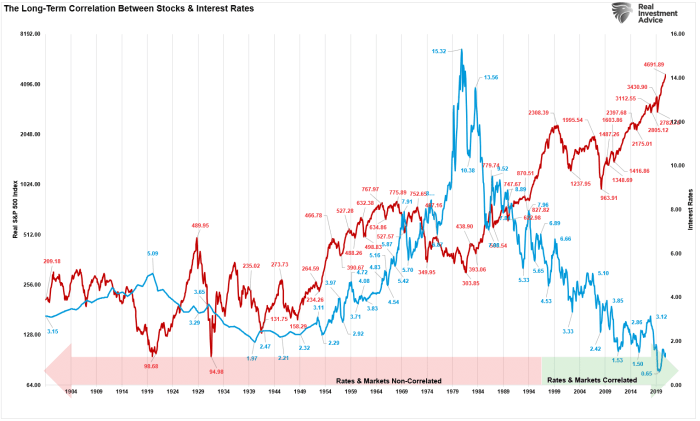
Interest rates play a crucial role in influencing the performance of growth stocks in the financial markets. Changes in interest rates can have a significant impact on the valuation and trading dynamics of growth stocks, affecting investor sentiment and overall market conditions.
Historical Events
- During the dot-com bubble burst in the early 2000s, the Federal Reserve raised interest rates to curb inflation, leading to a sharp decline in growth stocks as investors shifted their focus to value stocks.
- In 2018, the Fed’s decision to hike interest rates multiple times contributed to a sell-off in growth stocks, as higher borrowing costs made it less attractive for companies to pursue aggressive growth strategies.
- Conversely, during periods of low interest rates such as the aftermath of the 2008 financial crisis, growth stocks tended to outperform as investors sought higher returns in a low-yield environment.
Relationship between Interest Rates and Valuation
Interest rates and the valuation of growth stocks are inversely related. When interest rates rise, the present value of future cash flows for growth companies decreases, leading to a decline in their valuation multiples. On the other hand, lower interest rates tend to boost the attractiveness of growth stocks, as the discounted cash flow models favor higher growth projections.
Characteristics of Growth Stocks
Growth stocks are a type of stock representing companies that are expected to grow at an above-average rate compared to other companies in the market. They are known for reinvesting their earnings back into the business to fuel further growth.
These stocks differ from value stocks, which are undervalued in the market and are typically considered safer investments. Growth stocks, on the other hand, may have higher volatility but offer the potential for significant capital appreciation over time.
Key Characteristics of Growth Stocks
- High Earnings Growth: Growth stocks are characterized by strong earnings growth potential, often outperforming the broader market in terms of revenue and profit growth.
- Innovative and Disruptive: Many growth stocks operate in innovative industries and introduce disruptive technologies or business models that have the potential to revolutionize the market.
- Strong Revenue Growth: These companies typically experience rapid revenue growth, attracting investors seeking high returns on their investments.
- High Price-to-Earnings (P/E) Ratio: Growth stocks often have a high P/E ratio, reflecting investor optimism about the company’s future earnings potential.
- Minimal Dividend Payout: Unlike value stocks that may offer stable dividends, growth stocks reinvest most of their earnings into expanding the business rather than distributing profits to shareholders.
Outperformance During Economic Conditions
Growth stocks tend to outperform the market during periods of economic expansion and low-interest rates. This is because economic growth provides a favorable environment for these companies to thrive, while low-interest rates reduce borrowing costs and make it easier for growth companies to access capital for expansion and innovation.
In conclusion, the impact of interest rates on growth stocks is a crucial factor that investors must consider in their decision-making process. Understanding this relationship can provide valuable insights into navigating the complexities of the stock market and maximizing investment opportunities. As interest rates continue to fluctuate, staying informed and adaptable is key to capitalizing on the potential growth opportunities presented by growth stocks in varying economic conditions.
Top FAQs
How do interest rates impact growth stocks?
Changes in interest rates can affect the performance of growth stocks by influencing borrowing costs, discount rates, and investors’ perception of future earnings potential.
What are the key characteristics of growth stocks?
Growth stocks are companies expected to grow at an above-average rate compared to other firms in the market, often reinvesting profits into expansion rather than paying dividends.
Do growth stocks always outperform the market?
While growth stocks have the potential to outperform during certain economic conditions, market fluctuations and individual company performance can impact their overall returns.


