
Embark on a journey delving into the world of Growth Stocks vs Value Stocks, offering insights into their characteristics, differences, and investment strategies.
Explore the key aspects of growth and value stocks, uncovering their historical performance and potential for investors.
Growth Stocks vs Value Stocks Overview
When it comes to investing, two common strategies are growth stocks and value stocks. Understanding the basic characteristics and differences between these two types of stocks is crucial for investors looking to build a diversified portfolio.
Characteristics of Growth Stocks
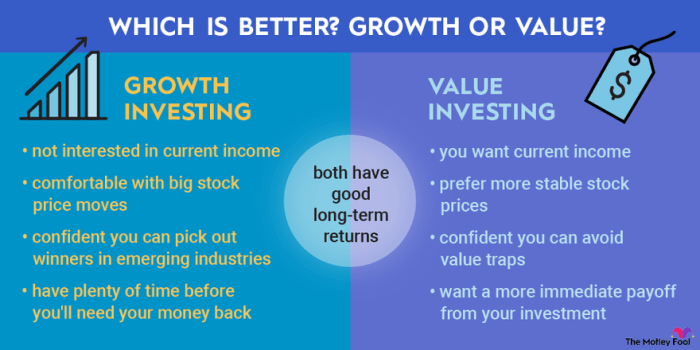
- Growth stocks are shares in companies that are expected to grow at an above-average rate compared to other companies in the market.
- These companies typically reinvest their earnings into expanding their business, rather than paying dividends to shareholders.
- Growth stocks often have high price-to-earnings ratios (P/E ratios) due to their expected future growth potential.
Characteristics of Value Stocks
- Value stocks are shares in companies that are considered undervalued by the market based on fundamental analysis.
- These companies may have lower P/E ratios and offer dividends to shareholders, making them attractive to income-seeking investors.
- Value stocks are often found in mature industries or companies experiencing temporary setbacks.
Key Differences Between Growth Stocks and Value Stocks
- Growth stocks focus on future earnings potential, while value stocks focus on current earnings and intrinsic value.
- Growth stocks tend to have higher volatility and risk compared to value stocks.
- Investors in growth stocks are betting on future growth, while investors in value stocks are looking for potential price appreciation as the market corrects its undervaluation.
Examples of Growth Stocks and Value Stocks
Well-known growth stocks include companies like Amazon, Tesla, and Netflix, known for their rapid revenue growth and innovation. On the other hand, value stocks such as Coca-Cola, Johnson & Johnson, and IBM are recognized for their stable dividends and undervaluation relative to their intrinsic value.
Historical Performance of Growth Stocks vs Value Stocks
Over the years, growth stocks have outperformed value stocks in terms of total returns, especially during periods of economic expansion and bull markets. However, value stocks have shown resilience during market downturns and economic recessions, providing investors with more stability and income through dividends.
Characteristics of Growth Stocks
Growth stocks are characterized by their potential for substantial capital appreciation, as opposed to paying dividends. These stocks typically belong to companies that are experiencing rapid earnings growth and reinvest most of their profits back into the business.
Main Attributes of Growth Stocks
- Growth stocks often have high price-to-earnings (P/E) ratios, reflecting investor expectations for future growth.
- These stocks are typically found in industries such as technology, healthcare, and consumer discretionary.
- They may not pay dividends, as they prioritize reinvesting earnings to fuel expansion and innovation.
Examples of Successful Growth Stock Companies
| Company | Growth Strategy |
|---|---|
| Amazon |
|
| Netflix |
|
| Tesla |
|
Factors Influencing Growth Stocks
When it comes to growth stocks, several factors play a crucial role in determining their performance in the market. These factors can range from economic conditions to market sentiment, all of which can have a significant impact on the valuation of growth stocks.
Economic Conditions
Economic conditions, such as GDP growth, interest rates, and inflation, can greatly influence the performance of growth stocks. In a strong economy with high GDP growth and low interest rates, investors are more willing to take risks and invest in growth companies. On the other hand, during a recession or economic downturn, growth stocks may face challenges as investors become more risk-averse.
Innovation and Technology
Innovation and technology are key drivers of growth stock prices. Companies that are at the forefront of technological advancements and innovation tend to experience rapid growth, attracting investors looking for high returns. The ability of a company to innovate and adapt to changing market trends can significantly impact the performance of its growth stock.
Market Sentiment
Market sentiment, or the overall feeling or attitude of investors towards a particular stock or the market as a whole, can influence the valuation of growth stocks. Positive market sentiment can lead to increased demand for growth stocks, driving up their prices. Conversely, negative sentiment can result in a sell-off of growth stocks, causing their prices to decline.
Investing in Growth Stocks
Investing in growth stocks can be a lucrative strategy for those looking for high returns, but it comes with its own set of risks and challenges. Here, we will discuss strategies for identifying potential growth stock investments, the risks associated with investing in growth stocks, how to diversify a portfolio with growth stocks, and tips for long-term success when investing in growth stocks.
Identifying Potential Growth Stock Investments
- Look for companies with strong earnings growth over time.
- Consider industries that are poised for future growth, such as technology, healthcare, or renewable energy.
- Pay attention to companies with innovative products or services that have the potential to disrupt the market.
Risks Associated with Investing in Growth Stocks
- Growth stocks can be volatile and subject to sharp price fluctuations.
- There is a risk of overvaluation, where the stock price may not reflect the company’s true value.
- If the company fails to meet growth expectations, the stock price could plummet.
Diversifying a Portfolio with Growth Stocks
- Allocate a portion of your portfolio to growth stocks while also including value and income stocks for balance.
- Consider investing in growth stock mutual funds or ETFs for diversification across multiple growth companies.
- Regularly review and rebalance your portfolio to ensure it aligns with your risk tolerance and investment goals.
Tips for Long-Term Success when Investing in Growth Stocks
- Focus on the long-term potential of the companies you invest in, rather than short-term market fluctuations.
- Do thorough research and stay informed about the companies you invest in to make informed decisions.
- Consider dollar-cost averaging to mitigate the impact of market volatility on your investments.
In conclusion, understanding the nuances between Growth Stocks and Value Stocks is crucial for making informed investment decisions in today’s dynamic market environment.
Questions and Answers
What are growth stocks?
Growth stocks are shares in companies that are expected to grow at an above-average rate compared to other firms in the market.
How do value stocks differ from growth stocks?
Value stocks are considered undervalued by the market and are typically priced lower than their intrinsic value, offering potential for long-term appreciation.
What factors influence the performance of growth stocks?
The performance of growth stocks can be influenced by various factors including economic conditions, market sentiment, and technological advancements.
What are some risks associated with investing in growth stocks?
Risks associated with growth stocks include volatility, market fluctuations, and the potential for a company’s growth to not meet expectations.
How can one diversify a portfolio with growth stocks?
Diversifying a portfolio with growth stocks involves investing in stocks from different sectors and industries to spread risk and maximize potential returns.


